Saturday, January 1, 2011

And the tarp goes to

The last entry: Niels! Congrats - can you send me an e-mail (thomas_gauperaa*at*hotmail.com) with your full address?.

I wish you all a happy new year!

Friday, December 31, 2010

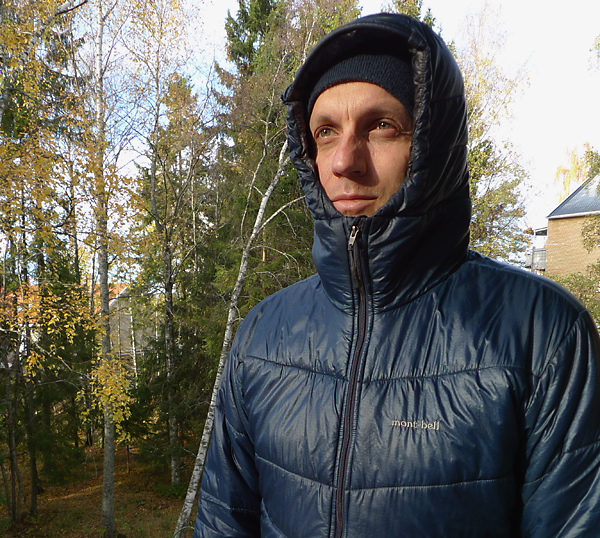
Review: Montbell Thermawrap Parka

Everyone seem to be writing about their favourite gear of 2010, so I thought I should do a review of the Montbell Thermawrap Parka, an light insulated jacket that is definitely a fave of mine. It's got lots of great features, but it is still not without its flaws. Nothing is perfect right?


The Thermawrap Parka is basically a light, windproof and water resistant hooded jacket with a layer of synthetic insulation. Montbell describes it as:

"simple, light weight, synthetic insulation that remains thermally efficient when wet. Whether it be a frigid mid-winter bike commute into the office or a harrowing belay high on the Compressor Route".

That the jacket still insulates when wet is of course a big plus compared to a down equivalent, like the Patagonia Down Sweater, which would collapse when water soaked through its shell. Still, wet insulation is something you want to avoid in any case, so I would recommend carrying a rain shell too if there is a chance of rainfall. Mine is a size large and weighs in at 13.4 oz (380 grams) on my scale. It's worth noting that these run small due to it being a japanese jacket. I normally wear a medium, so order a size larger than you normally wear.

The fabric used in the outer shell and lining is 15 denier Ballistic Airlight nylon with a DWR (Polkatex). Its very soft to the touch and does an outstanding job in blocking the wind - so much that I will be taking a long hard look at their windshirts when I wear out my Montane Litespeed. Montbell brags about the DWR treatment, claiming it can resist 100 wash cycles. This has not been my experience. I don't think its either more durable nor more effective than that on other garments I've tried


The insulation is 80gr/m2 Exceloft which I've found is very effective even though the layer is pretty thin. I think the jacket feels so warm because of a combination of the insulation, the ability to block wind and the very nice hood. Talking about the hood, lets move on to features.

The cuffs have what Montbell describes as "wedge shaped stretch panels". I like these for two reasons: comfortable fit + sealing to avoid drafts and snow.


The hood is adjustable and has a nice, snug fit. My only gripe with it is the adjusters that are close to the face and can be irritating at times when they stick out.


You also get two zippered pockets, dual hem adjusters and a micro fleece beard guard. Montbell also includes a stuff sack.

Long term use
I've been using the jacket a lot since I bought it, both when out hiking and in daily life. When hiking I've mostly used it in camp and at rest stops as insulation and it's done a great job. In daily life it is my goto jacket for most of the year and it's always kept me warm with a base layer beneath it. We've been having some really cold weather here lately with temperatures plummeting to -15C and that's more than it can handle, so I'm using a MH Monkey Man fleece as midlayer to boost warmth. This is a very warm combo though so its not something to use while on the move.

The DWR wore away like all of them do eventually, so I had to use some Nikwax spray to reapply it. Tiny holes have appeared on the back due to abrasion, leading to small dots of insulation leaking out. Nothing to bad, but I would've expected it to take more abuse. I've also been having problems with the zipper splitting - I guess this is normal zipper wear, but I have seldom encountered it in other jackets. In my opinion they should've used a stronger and more durable zipper.

Sizing and availability
Montbell products are not available in Norway so I had to get the Parka from the states. They offer a wide range of sizes and both a mens and womens version. Note that the parka is part of a series of synthetic insulation products - they also have a jacket, pant and vest.

Conclusion
So, is this something I would recommend getting? Yes, I think so, but maybe not for longer trips like thru-hikes because of the relatively weak zipper. Overall I think it is a great insulation piece which is really versatile, and quite affordable too.

Saturday, December 18, 2010

Raffle: backpackinglight.co.uk solo tarp

I have a very nice solo tarp from backpackinglight.co.uk lying around not getting the attention and adventures it deserves, so I'm giving it to one of you readers.


The tarp isn't brand new, but it's not far from it having only been pitched in fair weather a couple of times to practice, never in anger. It's a high quality silnylon tarp with several pitch options. More information can be found on the product page at backpackinglight.co.uk.

To participate you only have to give a short presentation of yourself - I'm curious about who my readers are. Please leave a link to your blog or your twitter feed if you have one.

I will use random.org on the 1st of january 2011 to find out who gets the item.

Thank you for following my blog - I really appreciate it. Have a great weekend and take care.

Sunday, December 5, 2010

How to stay warm in -40 C


Earlier this week I found an interesting infographic showing what clothing Lars Monsen and Hardald Tunheim recommends to stay warm and without frostbite at -40 celsius (-40 F). I don't know anything about Harald Tunheim, but Lars Monsen is probably the most well known outdoors person in Norway. If I bring my stove on a trip people will often comment "that is so Lars Monsen". He's super experienced after being an outdoors person all his life, and after completing several challenging expeditions, like crossing Canada with dogsled. He's made several TV shows and written books about his expeditons and about gear and techniques.

Here's the infographic with a translation to english below:


How to dress for extreme cold
These are some clothing tips from harald Thunheim and Lars Monsen, both dog sled drivers. They have both experienced extreme cold and know how to dress to avoid frostbite.

Head
Wool beanie with opening for face (my comment: balaclava?).
(Harald Thunheim prefers a fur cap with sides that can be connected below the chin with velcro. He also uses goggles and a face mask if there is a lot wind).

Neck

The neck is covered with wool.

Upper body
Wool sweater with neck, vest or down jacket.
Two wool shirts, short and long sleeve.

Outer layer

Windproof jacket made out of a strong fabric, and with a solid hood. Should be long so that it covers the buttocks.

Hands
Outer layer: Sealskin mitts that covers much of the lower arm (windproof).
Inner layer: Wool mitts.

Legs

Two wool long underwear bottoms.
Outdoor pant or fleece pant, preferably with reinforced knees.
Thick, insulated field trousers.

Feet
Thick wool socks, two pairs.
Shoes made from pure wool.
Use shoes that are a couple of sizes too large. Insert thicker and better isolated insoles as the cold comes from below.


Don't shower every day
Lars Monsen thinks that a layer of dirt protects against the cold, so don't shower as often.


This clothing setup is of course mostly geared towards dog sled drivers and people staying mostly stationary in camp, as well as people who don't like deodorant. Any heavy physical activity would probably make a person hot and sweaty, needing to shed some layers, but then again : -40 C is pretty cold.

Staying comfortable and dry when moving in -7 C
I went for a walk today in the forest close to where I live and I learned something, I always do when I am out.  The temperature was -7 celsius (20F) with some light snow falling and no wind.

When I left I was wearing synthetic socks with wool socks on the outside, hikings boots, high gaiters, Woolpower long underwear bottoms, Lundhags pants (cotton/poly blend), synthetic baselayer from Stormberg, Patagonia R1 hoody, Polar Buff, beanie, Marmot Driclime windshirt, fleece gloves and MLD rain mitts. I started out a little chilly and then I felt my back getting warm, so I removed the windshirt. After a while my ears got chilled so I put on the hood/balaclava of my R1. This shedding of layers and putting them on again continued the whole trip, with the goal being to not get sweaty.

Now you might say that getting sweaty isn't a big deal, and in summer it isn't, well except for potentially scaring friends and wildlife with your body odor, but it is in winter. Imagine you're working hard, walking on snow with your snowshoes on. You've felt your baselayer getting wet from perspiration, but you've not stopped to take care of it because you're a lazy or you don't want to make your friends wait. After a while you decide to stop to eat something and snap some photos, but you're stilling wearing what you wore while moving, not adding any insulation. Now you're not moving anymore so your body isn't producing warmth like before. Since you're still somewhat warm you're still sweating some and the sweat is evaporating from your skin, taking warmth with it. After a while it stops evaporating, but your baselayer is still wet and water transports heat 25 times more efficiently than air, hard facts that you definitely don't like in that situation. So, you really want to be observant and shed layers when needed to reduce sweating, and you want to put on some insulation as soon as you stop. I knew all of this beforehand of course, but I haven't been this focused on it before, mostly hiking in warmer conditions. In winter it is essential to be mindful of this.

Sunday, November 21, 2010

Onwards, on snow


Glenn and me are still on our way to Rondane, but the going is getting tougher. A month ago we were camping in typical late fall conditions with temperatures around 5 degrees celsius and rain. This time we were trodding along in 10-15 cm of fresh, wet snow. Physically demanding hiking, but also exhilirating to be on the move in such a beautiful, serene landscape, muffled by the soft snow.

This time we didn't leave early to take advantage of the light - we just accepted the fact that it would be dark most of the time anyway (the sun sets at 3:45 pm here now), so we didn't rush it and left at 5 pm, taking the train to Eidsvoll where we left the trail last time.

It was quite chilly when we got there, with a stiff breeze from the north making us quickly put on beanies and hoods to stay warm. First order of business was to get some bone dry firewood to reduce the effort of making a fire. We hoped the local gas station would have some, but they didn't. They told us to try the local Europris shop, not far away. A bag of 25 litres of birch wood was quickly secured and we were on our way to find a suitable place to camp. To get to where the trail started we had to walk several kilometres along roads that criss-crossed the landscape of fields and farms. It was dark and we made sure to have our headlamps on so we would be visible to traffic. The red blinking light on the battery pack of my Gamma headlamp worked great to make us visible also from behind (thanks for that feature Alpkit!). At some point we realized that we wouldn't reach the trail head before it got too late, so we got off the road and climbed to the top of a hill to find a suitable spot there. It was hard going to get up, especially with the added firewood, but we found a nice spot, put up the Nallo and got a fire going.


After the now obligatory-on-all-our-trips chips+beer combination, and Real Turmat, we retired to our sleeping bags, Glenn opting to sleep outside with a bivy. I slept very well that night (yay!), only waking up a few times to change my position, but then dosing off quickly. My WM Ultralite bag and Exped Downmat 7 kept me very warm and snug, even though I wasn't feeling toasty when it was about time to get up, probably because I was getting hungry.

We'd agreed to get going earlier than last time to take advantage of the daylight, so at 8:30am I got up and tried to wake Glenn.


He was deep asleep inside his warm cocoon of summer bag, winter bag and bivy, so it took some shouting and shaking to get him to react :).

A thin layer of snow had fallen during the night, covering the gear we had left outside. Glenn was happy that he had made a little tarp for his multifuel stove before retiring the previous night.


Breakfast was porridge in a bag for me, and porridge in a pot for Glenn. I wanted to try one of the homemade prepackaged meals I had left from this summer's trip with my brother. It's basically just microwave porridge mix with cinnamon, nuts, home-dehydrated apple pieces and nuts. Great stuff and so nice to just eat from the bag and not having to do any dishwashing afterwards.


After breakfast we proceeded down the trail at a good pace, happy to be on the move again. The snow slowed us down, but we were all smiles nonetheless. The first part was still close to civilization as we passed farms and houses, but soon the trail moved into the forest. Being the first people on the trail that morning, we could see the footprints of several animals on the fresh layer of snow from the previous night. We could even spot the miniscule tracks of forest mice. Amazingly we also saw insects buzzing about close to the snow, but of course at a more sedate winter pace. Still, I didn't know that any insects were active this time of year.


After hiking something like four hours, we found the hut we were planning to stay the night in, the "Lysjøhimet", a hut that is available for people hiking on the "Pilgrimsleden", the Pilgrim way to Nidaros in Trondheim. Much of the early part of Rondanestien is basically Pilgrimsleden, they share the same path


The hut is not fancy by any standards, being open to anyone all year round, and probably not having people look after it on a regular basis. It consists of a bedroom, kitchen and a living room with a fireplace and a cast iron oven. The kitchen has some plates, mugs and cutlery, but that's basically it. This used to be the main building of a farm (husmansplass) that was operated until the 1940s. The old cast iron, wood fired, stove is still there, but we didn't use it. Interesting to take a closer look at something like that though. I guess the people using it on a daily basis got their technique down, being able to regulate the heat by feeding wood to the different fuel chambers.


The house was freezing cold, so we soon started to look for some firewood. The shed outside had a nice supply (we left money for what we used) and both the oven and the fireplace were soon in afterburner mode, heating the place up so that we were able to warm up and dry our gear. It was so nice to just sit in front of the fireplace and talk and relax - not a single work related thought entered my mind. It's been pretty busy lately.


The next day we cleaned the place and brought firewood from the shed to the next visitors. We also wrote an entry in the visitor's log book. Most people seem to visit the hut in the summer months, and many of them are from other european countries, like France and Germany. One of the entries was in german - maybe Hendrik can translate it if he reads this blog entry. I think they thought the place needed to be renovated, but then they found the fireplace and that made all the difference.


Like the previous day the going was quite tough, with an extra layer of snow that had fallen during the night. Once more we were able to study tracks made by animals running around in the early morning hours. Maybe you can identify these tracks? Glenn thinks it's from a fox:


We had lunch close to a lake where people use to go swimming during the summer. I had gotten a bit sweaty during the last hour and paid the price by getting a bit chilled. It's so important not too overheat when hiking in winter conditions. The key is to continually put on and off layers and not being afraid to wear very little at times, maybe just a baselayer and a windshirt, and then putting on the puffy layers when stopping to eat or take a break.


Rested and fueled up we continued northwards, just enjoying the views.


After maybe an hour hike we reached an intersection where the Rondanestien and Pilgrimsleden parted ways, our starting point next time. The hut Lysjøhimet was 100 kilometres from Oslo, with 320 to go. I reckon we're something like 310 km from Rondance now. We both feel that this is a project that we will be able to complete, probably next year. This being such a good experience to me personally, makes me want to do more winter camping. It's a great feeling to be able to have a good time under such challenging conditions, well compared to the hiking I do the rest of the year anyway.

So what did I learn from this trip?

Temperatures around 0 degrees celsius makes for challenging conditons. Everything gets wet eventually and it will be hard to dry your stuff if you don't have a fire going for a long time, or if you don't heat your tent with the stove (be careful!). I've found that a thick transparent plastic bag used as a pack liner works best to keep things dry. Silnylon bags etc. just get wet. I've ordered some cuben drybags from MLD to try too.

Next time I will wear even less than I did this time when moving to avoid getting a sweaty back - it wasn't a big problem, but getting chilled at the lunch stop wasn't necessary.

Don't make a fire under trees laden with snow like we did. The hot air that rose made the snow melt and drip on us :)

Some gear reflections:

Woolpower long bottoms - great! very warm and surprisingly light. I think I will get hooked on their selection of warm clothing.

Glenn's samekniv, a HUGE knife traditionally used by the sami people of northern Norway. It's heavy for sure, but very versatile. It's for instance great for chopping branches and small trees. I've considered getting one myself, but have ordered a Bacho Laplander Saw instead, as well as a Mora 840MB Clipper knife. That should cover most scenarios.

GG Mariposa Plus. Like it a lot, it's the pack I use the most. Got pretty wet this time though because of the conditions we faced, but can't really fault it for that. I have a couple of other packs on the way now that I think will replace it, the Laufbursche Huckepack and the BPL Absaroka. Have to reduce my "collection" since it is getting a bit out of hand, so will be posting on gear swap forums soon :).

Dryer lint. Not really gear of course, but thought I should mention that it is very effective as tinder!

Hope you enjoyed this post, let me know if they get to long winded, or if you have other comments. Take care and have a great week!.

Sunday, November 7, 2010

Onwards!


Text message from my friend Leif late friday evening last weekend:

"Hi, do you want to go out?"

Me:

"I'm in the woods with Glenn :)"

Leif:

"Savages"

Yes, I guess being out in the woods on a friday evening when it's dark, cold and wet is not what most people do, but me and Glenn were still having a good time, continuing our journey on the path to Rondane.

That friday we'd left early from work and gone by train and bus to get to where we'd left the path the last time. An hour or so hike took us to an area north of Gardermoen, Oslo's main airport. It was getting late and we had to find a spot to set up the shelter and make a fire and cook dinner. It was rather difficult because of the dark and wet ground which looked uninviting. Glenn wanted us to camp in the forest, but I insisted on going further to find a more open area. After a while we found one close to a large field. We put up the large 3m x 3m tarp first and then Glenn's Helsport 3-person tent so that the entrance was sheltered.


We used the rest to sit under while cooking dinner and enjoying the warmth of the fire. We'd been carrying plenty of bone dry firewood so the fire was relatively easy to get going even though we had light rain.


Mintuu, beer and Real Turmat was had before we retired to the luxurious by UL standards double wall shelter. It was even warm and dry as Glenn had been heating it with his multifuel stove, something I've heard of people doing, but never tried myself.

I slept ok and definitely warm enough in my new down sleeping bag on top of an exped downmat, but still a bit restless and waking up several times because of a stiff shoulder or from losing sensation in my hand or arm. Have to get that pad business sorted. Maybe I should try to inflate it less. Glenn slept soundly like always.

Breakfast was had inside the tent. We sat in our sleeping bags and ate yummy porridge that Glenn made in the vestibule with his stove. That warmed the tent as well, making it even better. I have to admit - tent life has some advantages, but then again I loved getting outside afterwards, taking in the cool and fresh morning air and looking at the weather, even though it was grim with a light drizzle and fog.


After packing up our gear we hiked north-east across fields, through forested areas and along roads. This section is probably the one that passes through the most populated areas.


For some reason I wasn't feeling 100% and I don't think Glenn was either. We soon found the root of the problem - lack of caffeine (we'd forgotten to bring coffee) - a short stop at the cafe at Eidsvoldbygningen took care of that problem, leaving us both super happy :D. We continued onwards along a dam, noticing the handywork of beavers. Lots of trees had bite marks and many had been successfully taken down. Got to admire the hard work they do.


We both hoped they would be left alone and not be taken down which happens too often. All to often animals have to pay the ultimate price just because they're following their instincts and in the process irritating and disturbing people.

The last leg towards our destination, Eidsvold, was mainly on tarmac laden road, and in rain and wind. Still, I was warm, dry and comfortable - feeling great compared to the last section where I was cold most of the time. It just goes to show that great hiking can be done when in company of good friends and good gear :).

Some reflections on gear:

Western Mountaineering Ultralite - I got this a couple of days before the trip so this was the trial run. I like it a lot! the size regular is a perfect fit for me. This may replace my Sierra Sniveller quilt for 3-season use. I think the added warmth of it being completely draft free and with a hood warrants the extra weight.

Montane Halo Stretch Event jacket - I've used this on 3 trips now and I like it a lot. I've never had a jacket that breathes better than this and I like the fit and features. Highly recommended.

Footwear: I chose to use boots from Garmont on this trip, as well as high gaiters from Trekmates. This worked out nicely and kept me warm and dry.

Headlamp - I needed something more powerful than the e+LITE, so I took the Gamma from Alpkit. Great piece of kit at a very affordable price (£ 12.50).

Sunday, October 3, 2010

Section hiking Rondanestien

As some of you might know, I'm planning to hike the Pacific Crest Trail (PCT) in 2012, a 2650 mile trail that runs from the border to Mexico and all the way to the border to Canada. Why? you might ask, and plenty have done so when I've mentioned it. Well, ever since I graduated as a master of science in informatics in 2000, I've basically just been working and living a pretty standard life. I didn't even take a break when I graduated like many do - I just jumped straight into my first job and got going. By all means, I like my job, but somestimes it is scary how similar days, weeks and months are, sometimes to the point that I can't tell them apart. I think I really need to get out of the daily grind and take the time to experience something completely different, and that's where the PCT comes into the picture.

I know the PCT will be a huge challenge, so I'm trying to accumulate as much experience as possible before I leave. Lately I've begun section hiking "Rondanestien", a trail that starts in downtown Oslo (the capital of Norway) and then runs all the way to the center of Rondane, a beautiful mountaineous area with several peaks above 2000 meters. The trail is 430 kilometers (267 miles) long and is supposed to take 23 days. Since I don't have the time to thru-hike it, I'm doing it section by section with my friend and colleague, Glenn. We've so far done three sections and made it to a spot a couple of hours from "Eidsvoll verk".


We're both trying to keep the carried weight to a minimum, but since these are weekend trips we are not being hardcore about it, bringing for instance what we want in terms of food and drink. One way we've decreased weight though is by sharing a 3x3 meter polyester tarp which provides lots of space and protection for the two of us.


The pictures above are from the previous weekend when we hiked in pretty cold weather, and the first day in rain too. Our first pitch, though at a beautiful spot (loved waking up to the view there), gave us a chilly night. We should've pitched the right wall all the way to the ground to block the wind. Even Glenn in his winter bag inside of a bivy got a bit cold. The next night (second picture) was better, but I still got a miserable nights sleep, having my bivy sliding on the slippery surface of my Neoair and having no pillow since I wore it (my MYOG west) to be warmer. My quilt, the JRB Sierra Sniveler, is definitely warm enough, and gives great freedom of movement for a side sleeper like me, but I'm missing the cocoon feel of a mummy bag with zero drafts and less adjusting needed, so I'm therefore probably going to invest in a Western Mountaineering Ultralite next year which is rated down to -7 celisus - a bag which has gotten rave reviews and seems to be the most commonly used by thru-hikers of the PCT.

Getting a good nights sleep in the outdoors is something I'm working on, and is essential if I'm going to have a chance of completing a trail as long as the PCT. Last weekend I slept kinda ok the first night and like I said, miserably the second. That coupled with having been cold most of the day because of wet feet and more, brought me to a poor state. I've got to find a way to be comfortable at night and warm at all times during the day to keep my energy levels high.

I mentioned shoes - I've been a big fan of using trail runners this season, using them for instance in Rondane with no problem whatsoever. The difference this time was that my Sealskinz socks were ruined from a hole developing in the heel area, so I opted to go with just normal hiking socks. For some reason I chose to wear quite light socks too, the "Trail light" from Bridgedale I think, which are for "warmer conditions". This should prove to be bad setup. I didn't take long before my feet were soaked from walking in boggy conditions and my cold and wet feet started to sap my body warmth. Glenn lent me some thick pure wool socks which I wore on the inside with the Bridgedale on outside, which helped a lot since they provided a thicker layer of insulation and being wool they felt warm(er) even though they were wet. Still I would've preferred dry feet. Next time I will leave the trail runners behind and use boots, or maybe buy gore-tex oversocks and thick wool socks to use with the trail runners.

Hiking with Glenn has been great. A highlight on the last trip was when revealed that he had stealthily brought beers and potato chips!


I can't begin to describe how good that tastes at the end of a long day walking when you're thirsty, hungry and lost a lot of salt. Yummy!

I leave you with more pictures from the two trips, as well as my gear list for the last one. Take care and have a great week!

SECTION HIKE FROM RUSTADSAGA TO DAL, SEPTEMBER 2010
BACKPACK
Jam 2, 2008 model I think. (great pack!, only miss hipbelt pockets) 624
CLOTHING
Montane Halo Stretch eVent jacket (great!) 415
Mount Hardwear Epic rain/shell pant (main pant) 222
MYOG thru-hiker vest with Climashield Combat insulation (so light and warm!) 178
Beanie 62
Polar Buff 59
BPL Beartooth 277
Fleece gloves 69
Helly Hansen synthetic bottoms 141
Bridgedale hiking socks, wool and synthetic mix I think 55
Viking Tracker trail runners 1015
Integral Designs shortie gaiters66
Driducks rain jacket (to be used close to the fire to protect my shell from the sparks, but we never made one) 151
Montane Jetstream wind shirt 80
MLD rain mitts 31
Smartwool mid calf socks for sleeping 97
Stormberg synthetic long top191
Stormberg synthetic bottoms (didn't really need, but nice to use two long bottoms when I was really cold) 186
SHELTER
3m x 3m Dovrefjell Polyester tarp 733
Stakes 83
Tyvek Homewrap groundsheet 144
SLEEPING
Tigoat Raven XL bivy 235
JRB Sierra Sniveller, stored in sea to summit 13L drybag 716
Neoair regular, carried in stuffsack 424
OTHER GEAR
Recta thermometer and compass incl. Nite-ize biner13
Panasonic LX3 camera 261
3L Camelback with inline filter 357
Helsport rain cover (I have to admit that rain covers doesn't work, the pack gets wet eventually) 89
Sea to summit long handled aluminium spoon 11
Small stainless steel knife (should have left it at home and just used my Moira) 20
Moira Classic knife 52
Kuuksa 86
Downmat repair kit (Glenn borrowed my Exped Downmat 7) 14
Mesh wire bag 26
Powermonkey charger for the iPhone 84
Camera mount for the tigoat pole 8
Some extra guyline 10
Mini Bic 9
Petzl e+lite 27
Small cree flashlight, very bright (didn't really need it) 74
2 x grip-clips 10
TOILETRIES
Spinn stuff sack with: 6
Lightload towel 15
Toothbrush and tiny transparent jar with organic toothpaste 22
2 pack paper handkerchiefs 42
cleansing hand gel, small bottle 22
4 pcs paracetamol 2
Small bottle with a littel bit of dr.Bronners (didn't use) 15
Tigoat poles (not so happy with these, have ordered Fizan ones to replace them. Will probably sell the Tigoat ones) 234
7763grams
(I started out with 1-1.5l water and about 2 kilos of food, and I of course wore some of the clothes in the list :). When I started my pack weighed about 9.5 kilos. Note that I didn't carry a stove or a pot. Glenn carried that for the both of us. )
 
COMMENTS
- Biggest lesson learned: didn't bring the sealskinz socks since they're leaking in the heel area, so I had wet feet almost all the time which made me cold and miserable :-(. Didn't help that I brought too thin socks, the Bridgedale ones. Borrowed some pure wool ones from Glenn, my hiking buddy, and wore those with the Bridgedale ones on the outside, which helped, but too be honest I would have preferred heavier boots and dry feet. I will try some gore-tex socks to use with wool socks inside next time, or just wear boots
- Should have brought a mid layer that covered the arms, not just a vest. Will bring the Thermawrap parka next time, maybe some insulated pants too
- Neoair and tigoat bivy is a bad combo, slides all over the place